
UGTS · Food, dignity & community
Re-establishing · Seeking funding and partnersGood food should be within everyone’s reach.
Our Lower Mainland Food Hamper Program is rooted in a simple belief: access to nutritious food should reflect people’s needs, dignity, and real-life circumstances.
We are working to bring this community food-support program back, with the partnerships and resources needed to sustain it.
Help re-establish the program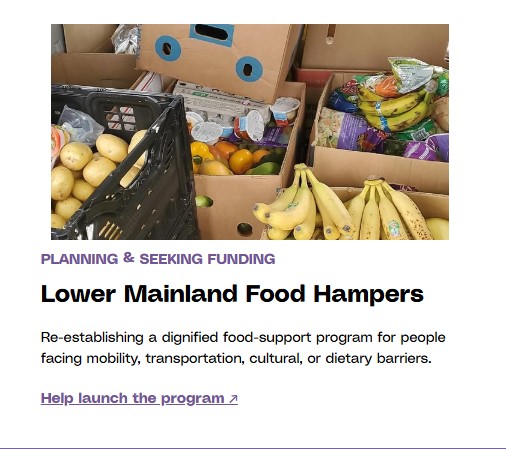
How the work grew
It began in Debra’s kitchen.
In 2020, during the COVID pandemic, Debra Abraham and her son Cesar started UGTS’s Food Hamper Program in their own kitchen. People were going hungry, and they began preparing hampers and delivering food themselves.
There was no funding at the beginning. Debra and Cesar donated food and used their own vehicles to make the deliveries. The program began with a mother and son responding to people’s need for food.
That kitchen beginning remains at the heart of the program: food with dignity, brought closer to people who face barriers to accessing it. Transportation, disability, family responsibilities, and other challenges can make reaching a conventional food bank difficult.
The work grew beyond those first kitchen hampers into a Lower Mainland home-delivery program, supported over time by food-rescue and community relationships. In spring 2022, it expanded into Chilliwack.
From Debra and Cesar’s kitchen to the communities we serve, the purpose remains the same: responding to hunger with care, dignity, and practical support.
The approach we are rebuilding
More than a box of groceries
Access that reflects real life
Our earlier delivery model helped reach households that could not easily travel to food-bank facilities. Accessible distribution is central to planning the next chapter.
Food with dignity
We aim to respond thoughtfully to household needs and to cultural and dietary considerations, while being clear about the food and resources available.
Community working together
Food donors, farmers, businesses, community organizations, volunteers, and funders all have a role in making consistent support possible.
Where we are today
Help bring the program back.
UGTS is seeking the funding, food partnerships, in-kind support, and volunteer capacity needed to re-establish the Lower Mainland Food Hamper Program sustainably.
Fund the next chapter
Discuss financial support for food access, coordination, storage, packing, transportation, and reliable program delivery.
Become a food partner
Connect with UGTS about food donations, food recovery, agricultural partnerships, storage, packing space, or other practical contributions.
Give your time or skills
Express interest in helping with coordination, packing, transportation, outreach, or fundraising as plans develop.
The Lower Mainland program is being re-established. Delivery dates, service areas, and participant intake will be announced when arrangements are confirmed. Sending an inquiry does not confirm food-hamper availability or registration.
Community voices
What food support has meant to families
These anonymous comments come from our earlier program. They reflect participants’ experiences at the time.
“it’s nice to have meat with our dinner”
“thank you for the fruit the kids and i made fruit smoothies all weekend”
“This program helps our families and communities tremendously. Super grateful. ALL MY RELATIONS”
Thank you to the people who made this work possible.
Christmas food support
With gratitude to MAZON Canada
MAZON Canada’s contributions each Christmas help UGTS provide Christmas food hampers for families. We are grateful for their continued generosity and for helping families share nourishing food during the holiday season.
Our earlier food-hamper work was supported by community relationships. UGTS’s records acknowledge FoodMesh, Second Harvest, Pomme Natural Foods, the Salvation Army, Bowls of Hope, and Fraser Valley Specialty Poultry at different stages of the program.
This is historical recognition. New partnerships and relaunch arrangements will be shared as they are confirmed.
Our partners and community collaborators →